
Getting a roof replacement permit Phoenix AZ contractors actually follow is often the most confusing part of a home repair project. You review a quote for a new tile system and see a line item for a city permit. A neighbor tells you they never pulled paperwork for their shingle job, while a roofing salesman insists the city will halt the project without it. Both statements leave you guessing, and guessing about building codes is an expensive way to run a project.
This guide explains how to check if your specific project needs approval, what the city expects for tile, foam, and shingle roofs, how the inspection process works, what a permit costs, and what happens if you skip it. If you are replacing a few slipped tiles or patching a minor leak, this guide is not for you. This covers full tear-offs and complete roof system replacements.
Do I Need A Permit To Replace My Roof?
The answer depends entirely on the scope of the work and the exact municipal jurisdiction your home sits in. The City of Phoenix building code allows for certain types of maintenance without pulling a formal permit. Standard residential re-roofing projects that use the exact same material do not always require a permit if the structural decking beneath the roof remains completely untouched.
However, the rules shift the moment the job becomes more complex or if you live in an adjoining city. If you live in an unincorporated part of Maricopa County, like Sun City, the county rules dictate the paperwork. Sun City falls under Maricopa County Planning and Development, which maintains different thresholds than the Phoenix city limits. Peoria and Surprise have their own distinct planning departments.
The Triggers For Phoenix Roofing Permit Requirements
You absolutely need a permit for your roof replacement if your project includes any of the following factors.
- Changing the roof material: Swapping asphalt shingles for concrete tile adds thousands of pounds of dead weight to your roof trusses. The city requires an engineer to verify the framing can handle the new load. A permit is mandatory to approve the structural change and ensure the home will not collapse under the new tile.
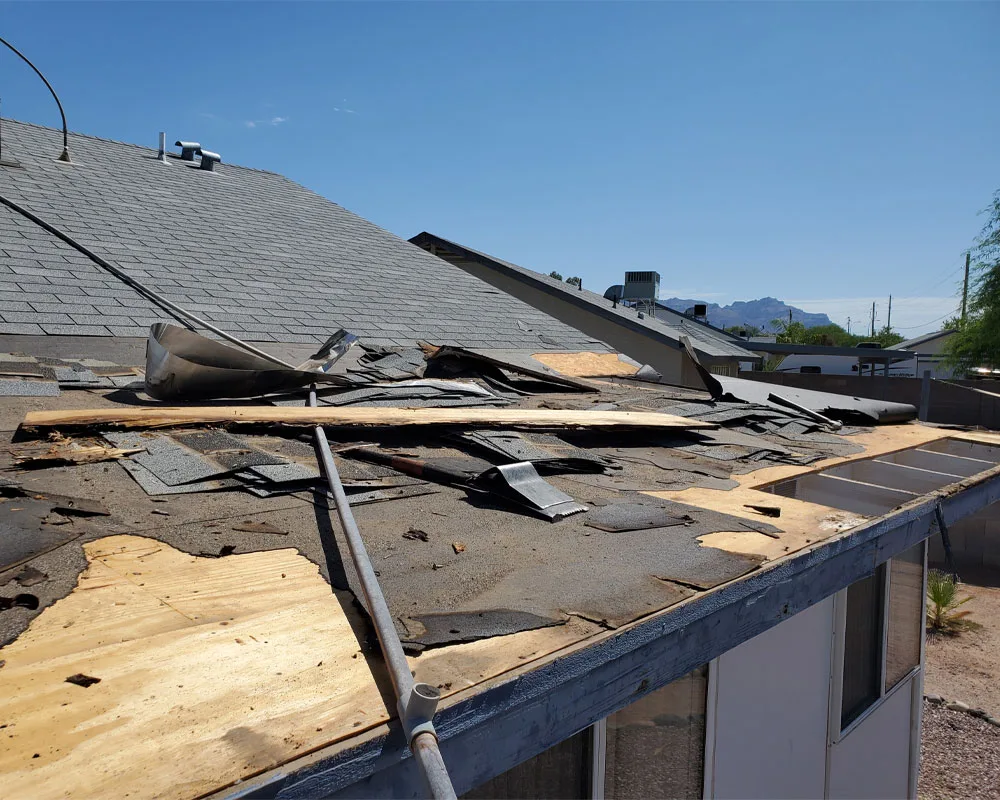
- Replacing structural wood: Tearing off rotten plywood decking, replacing damaged fascia boards, or sistering broken roof trusses requires an inspection. The city wants to verify the skeleton of the home remains structurally sound.
- Modifying the roofline or pitch: Building a new sloped patio cover over a previously flat section changes the exterior structure. This triggers full permitting and zoning reviews.
- Adding or moving penetrations: Installing new skylights, cutting new ventilation stacks, or moving the electrical mast requires a building permit.
- Historic district rules: Homes in historic Phoenix neighborhoods like Encanto or Willo have strict preservation overlays. Even an identical material swap requires a Certificate of No Effect and a standard building permit to ensure the visual character of the home is maintained.
Roof Replacement Building Codes And Inspections
When a contractor pulls a permit for your property, they are legally agreeing to follow local roof replacement building codes. These codes exist to protect the home from high winds, extreme desert heat, and violent monsoon rain.
The city enforces these standards through a series of mandatory inspections. The contractor cannot simply finish the job and take your money. They must coordinate with a city inspector who will visit the property at specific stages of the build.
- The deck and underlayment inspection: After the old roof is torn off and the new felt or synthetic underlayment is nailed down, all work stops. The city inspector arrives to check the condition of the exposed wood, the nailing pattern on the underlayment, and the installation of the valley metal. This happens before the tile or shingles cover the evidence.
- The flashing inspection: For complex roofs, inspectors verify that metal flashing around chimneys, parapet walls, and adjoining vertical walls is installed correctly to prevent water intrusion.
- The final inspection: Once the roof surface is fully installed, the inspector returns. They check the ridge caps, the sealing around pipe boots, and the structural ties to ensure everything matches the approved plans.
A failed inspection means the contractor must correct the work on their own dime and call for a re-inspection before they can advance to the next step. This builds a layer of strict accountability into the project and protects you from sloppy workmanship.
The Permitting Process For Roof Replacements
Securing a roofing permit involves actual paperwork and specific structural details. You do not just pay a fee and get a piece of paper. The planning department requires proof that the job will be done safely.
First, the contractor submits a detailed application listing the scope of work, the specific materials being used, and the valuation of the project. If the roof requires structural changes, the contractor must also submit a site plan and a letter from a structural engineer.
Once the city reviews the plans and approves the application, they issue the permit card. This card must be posted on the job site, usually taped to a front window or attached to the permit box in the yard, visible from the street.
Always force the contractor to pull the permit under their own license. If a roofer asks you to pull the permit as an owner-builder, they are trying to dodge liability. When you pull the permit yourself, you assume full legal responsibility for code violations, workplace injuries, and structural failures. A licensed roofing contractor takes that liability off your hands.
What Happens If You Skip The Permit?
Some aggressive sales reps will offer a lower price if you agree to skip the permit process entirely. Accepting that offer is a massive financial risk for the homeowner.
If a code enforcement officer drives by and sees a tear-off happening without a permit posted in the window, they will immediately issue a stop-work order. Your roof will sit exposed to the elements while you scramble to file retroactive paperwork. The city typically doubles the standard permit fee as a penalty for starting without approval.
The long-term consequences are even worse. When you try to sell the house, the buyer will review public records. An unpermitted roof replacement becomes an instant red flag. A buyer can demand you pay for a retroactive inspection, which often means tearing off sections of the brand new roof so the inspector can see the decking below.
Insurance carriers also check permit history after severe weather events. If your unpermitted roof fails during a microburst and ruins the drywall and flooring inside, the insurance company can deny the interior water damage claim on the grounds of improper installation.
How To Check Your Specific Property
Do not rely on a neighbor or an unlicensed handyman to tell you what the city requires. You can verify the exact rules for your specific address in less than an hour.
- Identify your jurisdiction: Look at your property tax bill. A Phoenix mailing address does not guarantee you are inside Phoenix city limits. You may fall under Maricopa County, Peoria, Glendale, or Surprise.
- Call the building department: Call the specific planning and development office for your jurisdiction. Tell them your address, the current roof material, the proposed new material, and whether the contractor expects to replace any wood decking. They will give you a straight yes or no answer regarding the permit.
- Check the contractor portal: Reputable roofing companies handle this research for you. They have portal access to the city permitting systems across the Valley and will include the exact cost of the permit in your written estimate.
Get Your Roof Replaced The Right Way
A roof replacement is too large of an investment to leave to guesswork. Skipping permits, ignoring structural codes, and using cheap underlayment are fast ways to ruin a home during the next monsoon season. You need a contractor who handles the paperwork, follows the building codes, and backs up the work. If your home in Sun City, Peoria, or the surrounding West Valley needs a new roof, call Sun City AZ Roofing to schedule an inspection. We will assess the decking, provide a detailed estimate, handle the permitting process with the county or city, and build a roof that lasts.