
Almost nobody in Sun City wakes up wanting a roof inspection. People book one because a buyer's agent asked for a roof certification, because an insurance carrier sent a letter about the age of the roof, or because a small stain showed up on a hallway ceiling after the last monsoon cell. All three are good reasons, and all three go better when you know what the inspection should actually cover.
This guide explains what a roof inspection in Sun City, AZ really includes, what changes depending on whether you have tile, foam, or shingles, how often an Arizona roof should be inspected, what a roof inspection costs in the West Valley, and how a roof certification for a home sale or insurance renewal is different from a standard inspection. If you already have active water coming in, that is a different situation and our emergency storm damage guide is the faster read.
What A Real Roof Inspection Looks At In Sun City
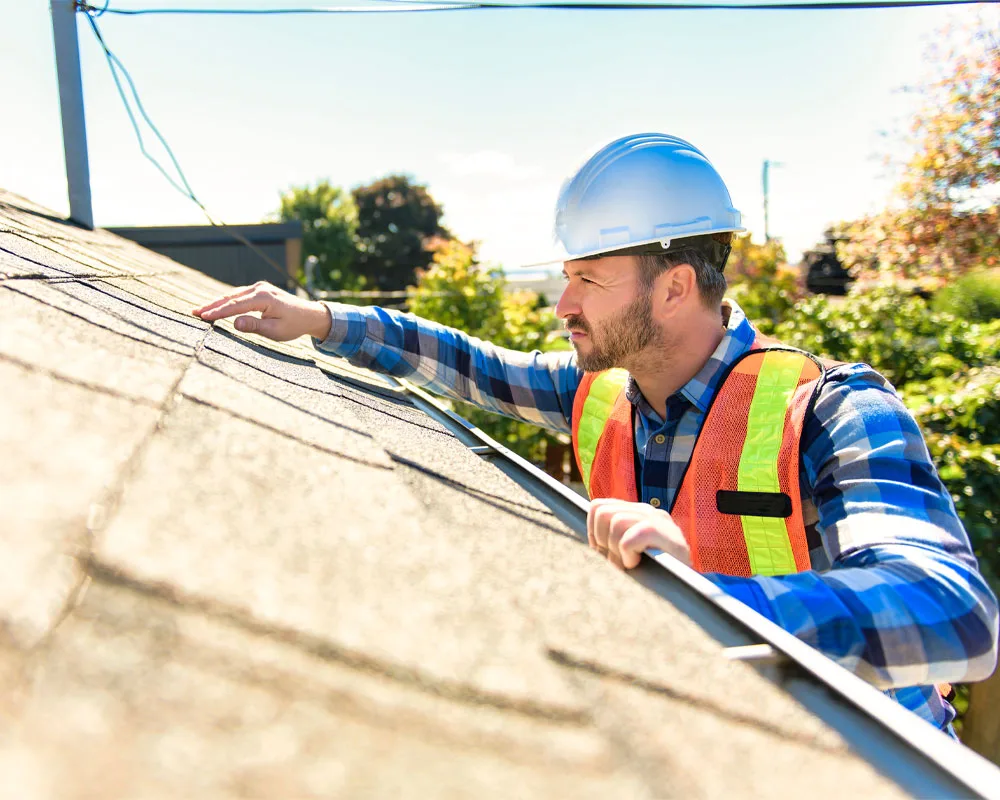
A drive-by with binoculars and a photo of the front elevation is not an inspection. A proper roof inspection puts a person on the roof, in the attic where there is access, and around the perimeter at ground level, and it ends with photographs of everything that was called out.
The report should tell you three things in plain language: what is wrong right now, what will need attention in the next few years, and a realistic estimate of remaining roof life. Anything vaguer than that is a sales pitch, not an inspection.
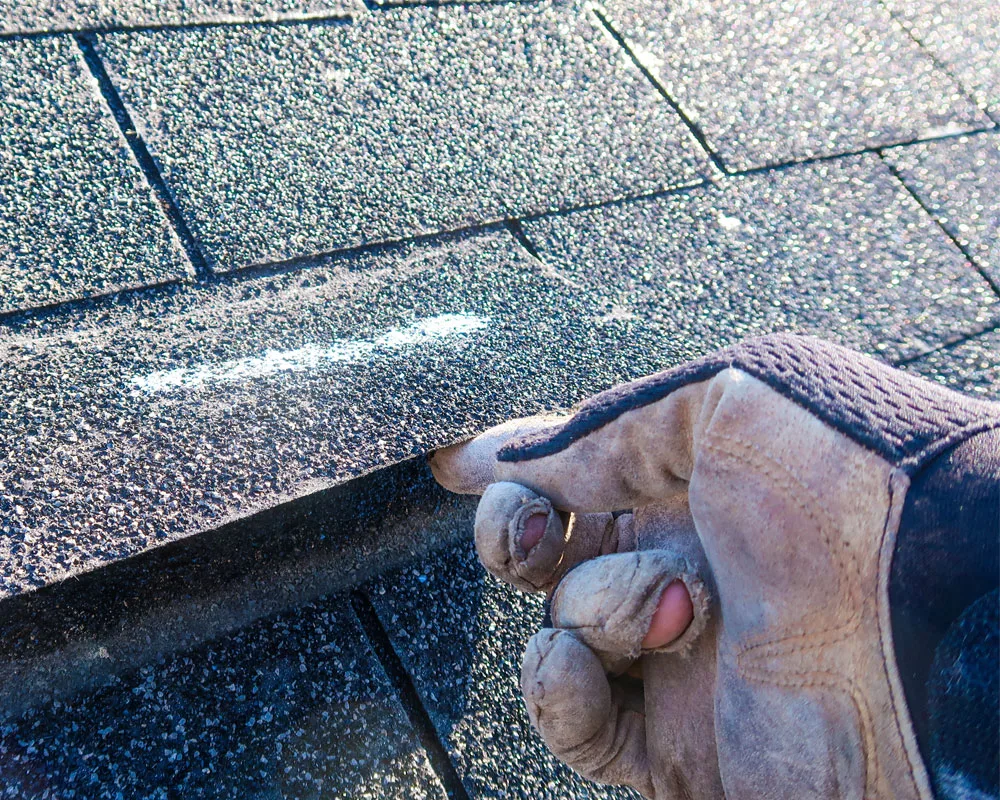
The roof surface itself: cracked, slipped, or previously repaired tile, blistering or ponding on flat sections, granule loss and curling on shingles, and any area that feels soft underfoot, which usually means the decking below has taken on water.
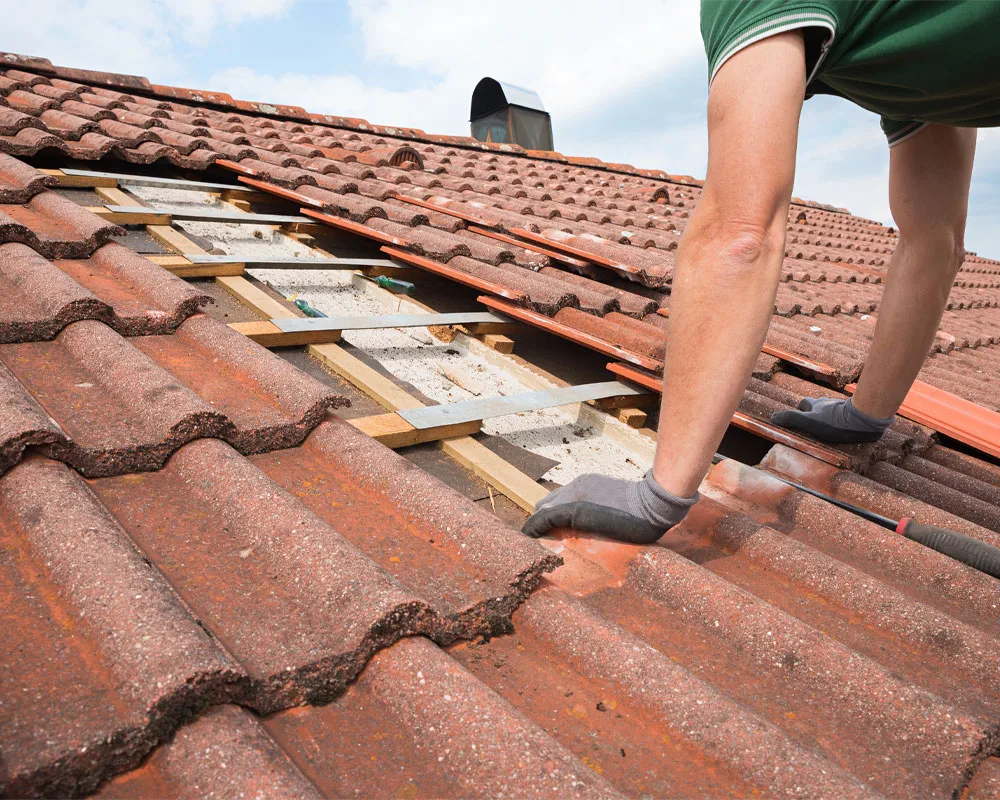
Underlayment condition: on a tile roof the tile is the umbrella and the underlayment is the actual waterproofing. A roofer should lift tile in the valleys and at the eaves to see whether the felt is still pliable or has gone brittle and cracked. This is the single most important item on any Sun City tile roof inspection.
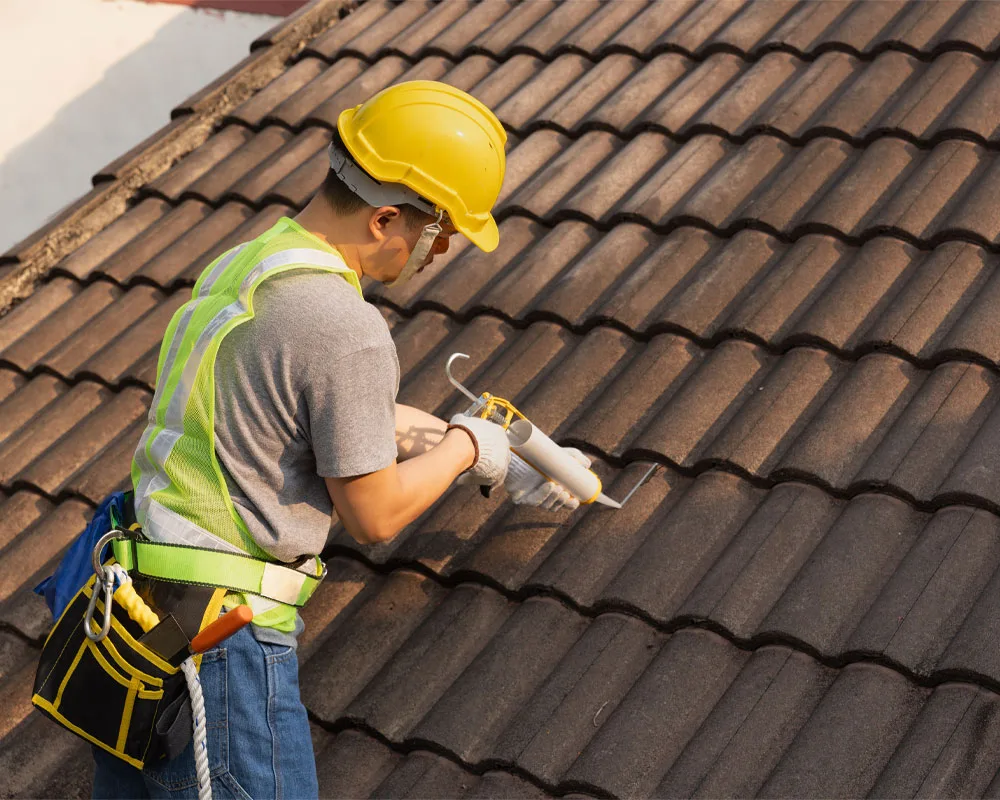
Penetrations and flashing: plumbing vents, pipe boots, furnace and evaporative cooler curbs, skylights, satellite mounts, and every wall-to-roof transition. Dried-out pipe boots and failed mastic cause more West Valley leaks than storm damage does.
Valleys, scuppers, and drainage: valley metal that has rusted or filled with gravel and palm debris, scuppers that no longer drain, and low spots on a flat roof that hold water long after the rain stops.
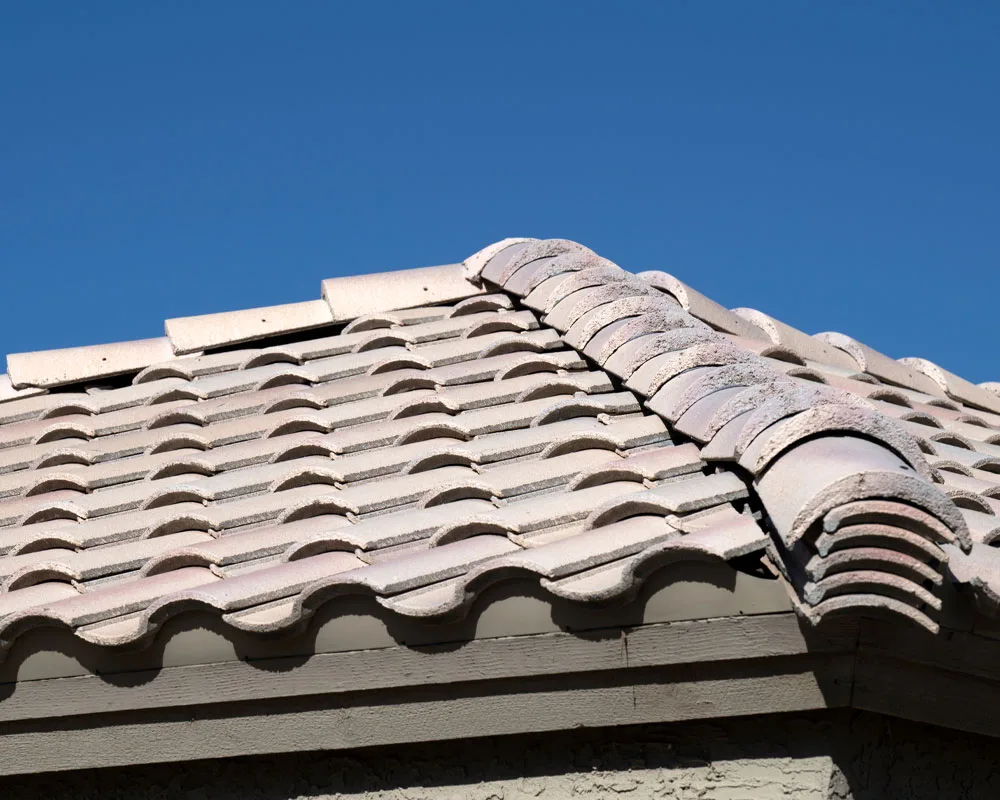
Ridges, hips, and mortar: cracked or missing mortar and loose ridge tile, which wind lifts first and which is cheap to fix before it becomes a slipped-tile repair.
The attic side: staining on the sheathing, daylight at penetrations, wet or compressed insulation, rodent intrusion, and whether the ventilation is doing anything at all.
Tile, Foam, And Shingle: What Changes By Roof Type
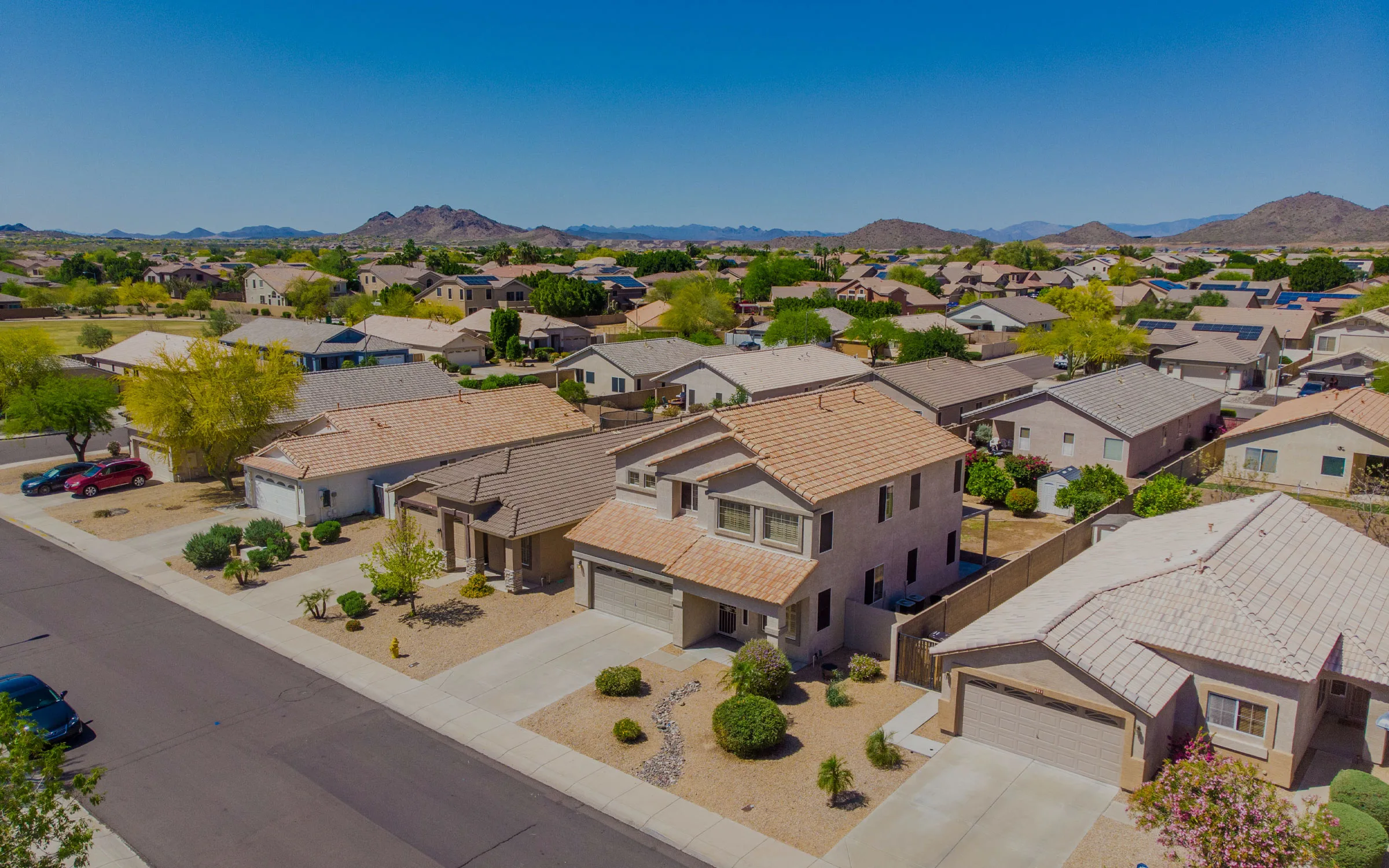
Sun City and Sun City West are full of 1960s through 1980s homes with concrete tile over low-slope additions, plus a large number of flat and foam roofs on Florida rooms, carports, and patio covers. Each system fails differently, so each gets inspected differently.
If your roof is a mix, which many Sun City homes are, the inspection has to treat each section as its own system. The transition between a tile main roof and a flat patio section is one of the most common leak points in the West Valley.
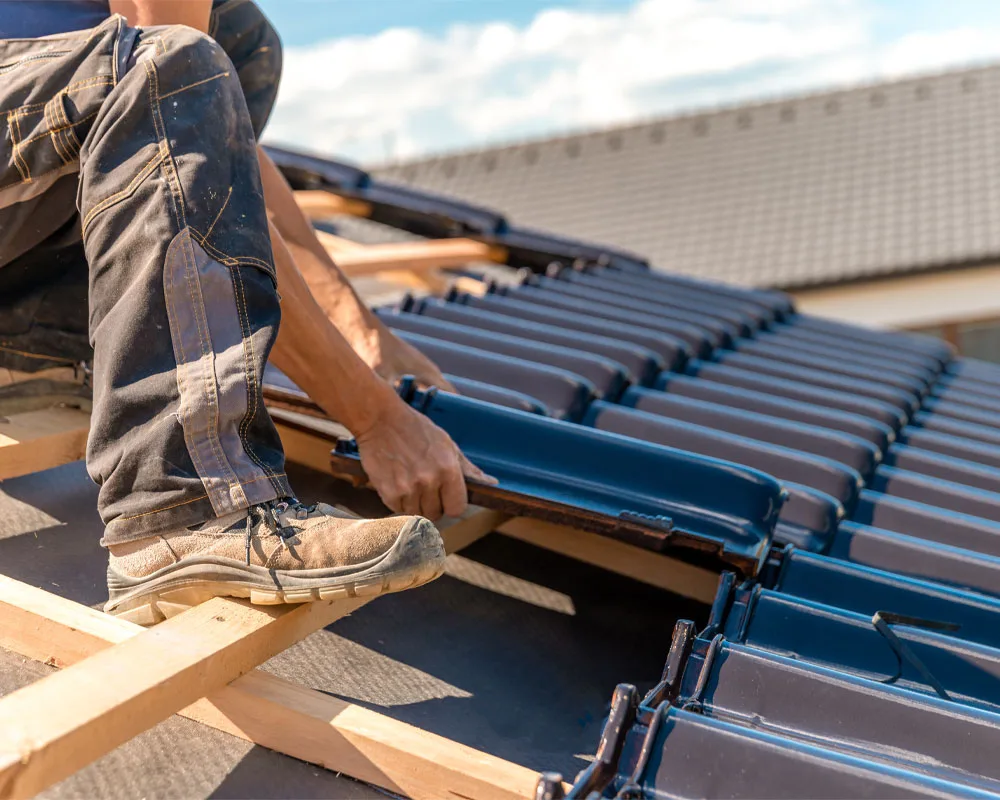
Concrete and clay tile: the tile can outlive the house while the underlayment underneath reaches the end of its life at roughly twenty to twenty-five years. A tile roof inspection is mostly an underlayment inspection, and the tile condition is secondary. Our guide to how long tile roofs last in Arizona covers that gap in more detail.
Foam and flat roofs: here the inspection is about the coating. We look for chalking, UV erosion, pinholes, blisters, cracked parapet edges, and whether water stands anywhere for more than a couple of days. Foam usually needs recoating every ten to fifteen years, which is far cheaper than a tear-off. See foam roof recoating versus replacement.
Asphalt shingles: Arizona sun cooks shingles faster than almost any other climate. The inspection focuses on granule loss, brittleness, lifted or thermally split tabs, exposed nail heads, and how the shingle field meets the flashing at walls and chimneys.
How Often Should An Arizona Roof Be Inspected?
For most homes in Sun City, Sun City West, Surprise, and Peoria, once a year is the right baseline, with a second look after any significant storm.
Every six months if the roof is over twenty years old, if the home sits under mature trees or palms, or if it has a flat section that has never been recoated.
There is no benefit to waiting for a visible leak. By the time a ceiling stains, water has typically been moving through the underlayment and decking for weeks, and the repair is larger than it needed to be.
Annually, ideally in May or June: this puts any repair ahead of monsoon season rather than in the middle of it. Pre-season is also when scheduling is easiest.
After any major storm: wind over roughly fifty miles per hour, hail of any size, or a night of hard sideways rain justifies a post-storm check even if nothing shows inside. Our monsoon roof damage checklist is the homeowner version of that walkthrough.
Before buying or selling: a home inspector's roof note is not a roofing inspection and the two frequently disagree. Buyers in a 55+ community are usually financing or insuring around roof age, so a dedicated roofing report matters.
Before a policy renewal: carriers in Arizona increasingly ask for roof age and condition documentation, and a dated report with photos is the easiest way to answer them.
Roof Certification For A Home Sale Or Insurance Renewal
A roof certification is not the same document as an inspection report. An inspection describes condition. A certification is a licensed roofing contractor's written statement that the roof is in serviceable condition and, usually, an estimate of how many years of remaining life it has, commonly two, three, or five years.
If the roof cannot be certified because the underlayment is at the end of its life, that is still useful information. It moves the conversation to a price credit or a planned roof replacement rather than a surprise two weeks before closing.
Who asks for one: real estate agents and title companies during escrow, buyers' lenders, and homeowners insurance carriers at renewal or when writing a new policy on an older home.
What has to happen first: a contractor cannot certify a roof that has open defects. If the inspection turns up slipped tile, failed pipe boots, cracked mortar, or an unsealed penetration, those get repaired, then the roof is certified. That repair-then-certify sequence is normal and is usually the fastest path to closing.
What it does not cover: a certification is not a warranty and it is not insurance. It states the roof's condition on the date it was inspected. Storm damage the following month is a claim, not a certification failure.
Timing in escrow: build in about a week. The inspection itself takes a couple of hours, but any required repairs need scheduling, and certifications are issued after the repairs are complete and photographed.
What A Roof Inspection Costs In Sun City And The West Valley
Pricing here depends on what you need the inspection for. A homeowner asking whether a stain is serious and a seller who needs a signed certification are buying two different things.
Any of these fees are commonly credited toward the work if you move forward with the repair. Expect a real inspection to take one to three hours depending on roof size, access, and whether the attic is reachable. For what the resulting repairs tend to run, see our breakdown of roof repair cost in Sun City.
Standard homeowner roof inspection: many West Valley roofing contractors, including us, provide a free roof inspection with a photo report when you are considering repair or replacement work.
Detailed written condition report: roughly $150 to $350 when you need a formal, stand-alone document rather than an estimate, for example for a dispute, an estate, or a records file.
Roof certification for a sale or insurance: typically $200 to $500 for the certification itself, plus whatever repairs are required before it can be issued.
Leak investigation with water testing: about $200 to $450 when a leak's entry point is not obvious and the roof has to be hose-tested section by section to trace it.
Infrared or moisture scan on a flat or foam roof: roughly $300 to $600, used to map wet insulation under the membrane before deciding between recoating and tear-off.
Reading The Report: What Recommended Versus Required Means
A good report separates urgency from opinion. When everything is listed as urgent, the report is selling; when nothing is, it is not thorough.
Required now: anything letting water in or that will at the next rain. Failed pipe boots, open flashing, slipped tile over living space, exposed or torn underlayment, soft decking.
Recommended this season: cracked ridge mortar, worn sealant, minor tile cracks, debris-filled valleys, a foam roof that is chalking but not yet pinholed. None of these are leaking today and all of them get expensive if they are ignored through a monsoon.
Monitor: cosmetic tile chips, light granule loss, small rust spots on flashing. Note them, photograph them, and look again next year.
Life expectancy estimate: this should come with a reason. Original 1985 felt with visible cracking at the eaves is a very different statement than a 2012 two-layer underlayment with a couple of slipped tiles.
Two questions are worth asking about any report: can you show me a photo of each item you listed, and what happens if I do nothing for twelve months. A contractor who answers both clearly is giving you an assessment. If the report reads like a quote with no photos, get a second opinion first. Our guide on how to choose a roofing contractor in Arizona covers the ROC license check and the questions worth asking.
Inspection Red Flags That Should Not Wait
Some findings genuinely change the timeline. If any of these appear in your report, do not push the work to next year.
Brittle or cracked underlayment at the eaves and valleys: the waterproofing layer is done, and the next hard rain finds it. This is the finding that most often turns into an underlayment replacement rather than a repair.
Ponding water on a flat section forty-eight hours after rain: drainage has failed, and standing water breaks down coating and membrane quickly in Arizona heat.
If several of these show up together, the honest answer is often that the roof is nearing the end of its service life. Our list of signs you need a new roof in Arizona walks through when repair still wins and when it stops making financial sense.
Soft or spongy decking: the sheathing is already wet, which means the leak predates the stain you noticed.
Daylight visible from the attic: an opening that size is also an entry point for rodents and birds.
Multiple prior patch jobs with mismatched mastic: someone has been chasing the same leak repeatedly rather than fixing its cause.
Sagging rooflines or displaced ridge tile: a possible structural issue and a wind risk at the same time.
Turning An Inspection Into A Maintenance Plan
The value of an inspection is not the report, it is what happens in the twelve months after it. The homes that never call us in an emergency are almost always the ones on a schedule.
Schedule the recommended items before the next monsoon: mortar, sealant, valley cleaning, and coating touch-up are all far cheaper in spring than in August.
If you are in Sun City, Sun City West, Surprise, Peoria, Glendale, or Youngtown and it has been more than a year since anyone was on your roof, that is the whole reason to book a free roof inspection now rather than during the next storm.
Fix the required items first: usually a few hundred dollars of flashing, boots, and tile work.
Keep the photo report: it becomes your baseline. Next year's inspection compares against it, and if you ever file a claim, dated pre-storm photos are the strongest evidence you can have. Our post on what homeowners insurance covers in Arizona explains why that matters.
Put the next inspection on the calendar: May or June, every year, plus after any serious storm.
Consider a recurring plan: our roof maintenance plans bundle the annual inspection, debris clearing, sealant refresh, and priority scheduling, which is what keeps small items from becoming claims.
Related Reading & Services
- Free Roof InspectionPhoto-documented inspections and reports.
- Roof MaintenanceAnnual care that keeps small items small.
- Maintenance PlansYearly inspections and priority scheduling.
- Roof Repair & Leak DetectionLeak tracing, flashing, and tile repairs.
- Roof ReplacementWhen the underlayment is past its life.
- Signs You Need A New RoofWhen repair still wins and when it does not.
- Roof Repair Cost In Sun CityWhat common fixes run in the West Valley.
- Sun City West RoofingInspections and repairs next door.
- Surprise RoofingServing Surprise and the northwest Valley.
Need A Sun City Roofer?
Talk to a real Sun City AZ Roofing team member, fast scheduling and honest, upfront pricing.