
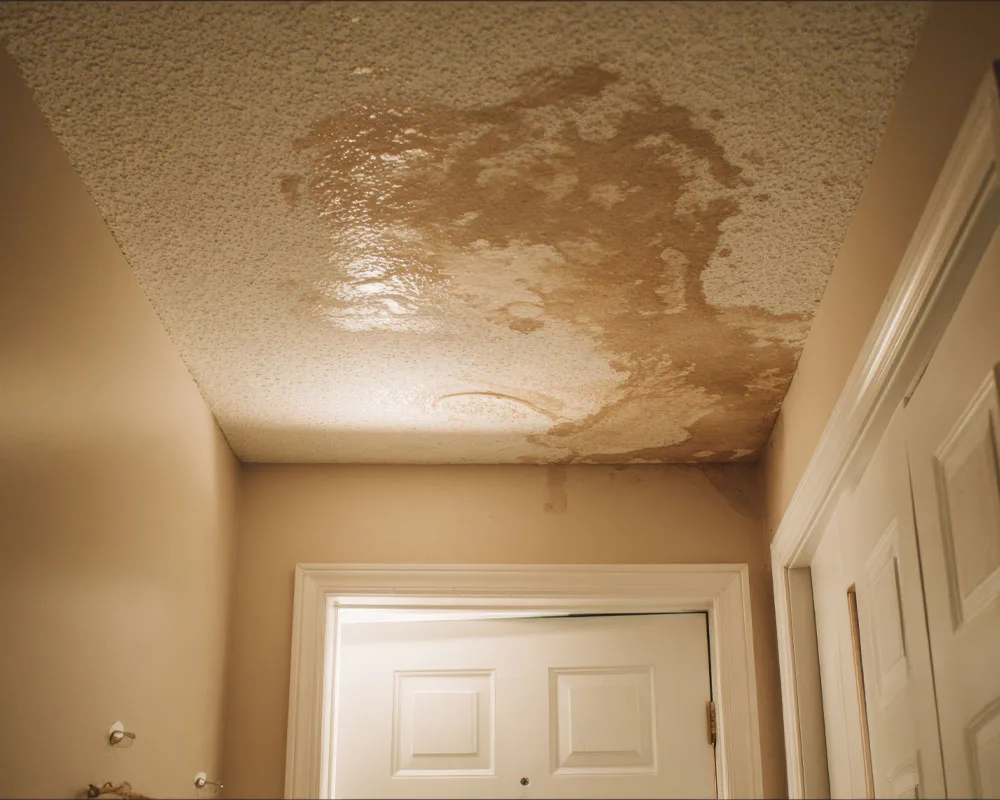
A monsoon rolls through the West Valley, and afterward you notice a water stain on the ceiling, a few displaced roof tiles, or debris on the roof. One of the first questions is usually the same: will homeowners insurance cover the damage?
In Arizona, homeowners insurance may cover roof damage caused by a sudden covered event such as wind, hail, or a falling object. But coverage depends on what caused the damage, what your policy covers, your deductible, exclusions, and how the policy values the roof. Arizona's Department of Insurance and Financial Institutions (DIFI) specifically advises homeowners to review their individual policy because limitations and exclusions can apply.
That distinction matters most in Sun City and Peoria, where monsoon damage often lands on roofs that have already spent years, or decades, under Arizona heat and UV exposure. If you already know you have damage, start with a free roof inspection so the condition of the roof is documented before anything gets touched.
Does Homeowners Insurance Cover Roof Damage In Arizona?
Generally, homeowners insurance is designed to cover sudden damage from covered events, not routine deterioration or maintenance. According to Arizona DIFI, homeowners policies may cover damage caused by wind, rain, lightning, hail, and other covered events, subject to the terms and limitations of the individual policy.
The important question is not simply whether your roof is leaking. It is what caused the roof to leak.
Wind damage: Wind that damages or displaces roofing may be covered depending on your policy.
Hail damage: Generally covered, subject to policy terms and any separate wind or hail deductible.
Falling objects: Damage from a falling branch or debris is generally covered.
Rain intrusion: Rain entering through a storm-damaged roof may be covered depending on the circumstances.
Age related wear: A roof that deteriorates from age is generally treated as a maintenance issue.
Neglected leaks: A long-term leak the homeowner knew about may be excluded.
Deteriorated underlayment: Coverage usually depends on the cause rather than the leak alone. Our tile underlayment guide explains why this component fails first in Arizona.
Flooding: Rising surface water is not covered by standard homeowners insurance.
Storm Damage Vs. Normal Roof Wear: Why The Cause Matters
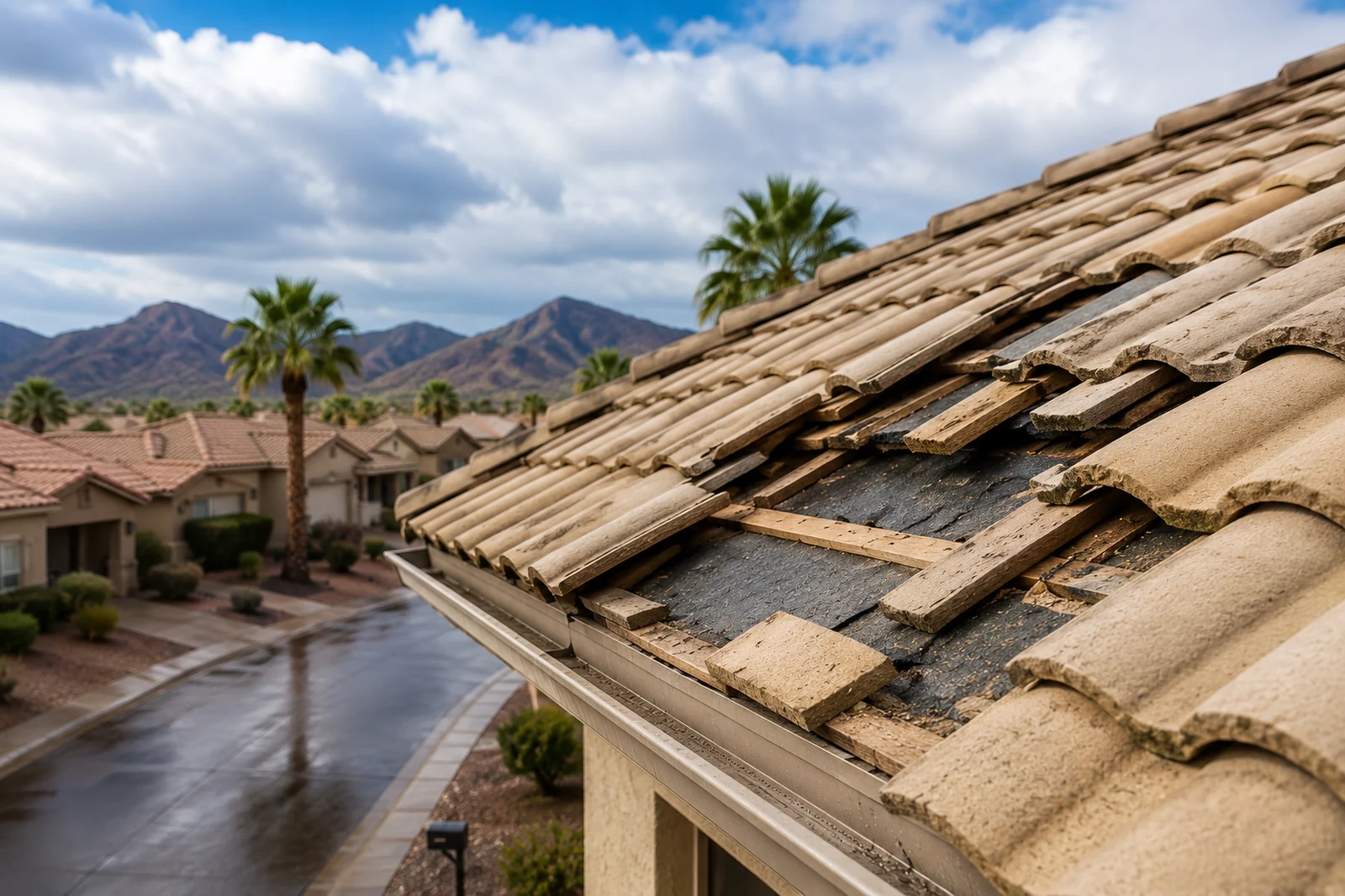
Imagine two Sun City homes with tile roofs. At the first home, strong monsoon winds displace roofing materials and rain enters through the newly damaged area. At the second home, the concrete tiles still look reasonably good, but the underlayment beneath them has deteriorated over many years and water eventually finds its way inside.
Both homeowners may discover a ceiling stain after rain. The underlying causes are completely different.
Homeowners insurance is generally intended for covered losses rather than normal aging, deterioration, or neglected maintenance. Your insurance company, not your roofing contractor, ultimately determines whether a particular loss is covered under your policy. That is why documenting the condition and cause of the roof problem is more useful than simply documenting that water entered the house.
What Arizona Monsoons Can Do To Your Roof
A monsoon does not affect every roofing system in the same way. Sun City AZ Roofing works with concrete and clay tile, asphalt shingles, modified bitumen, and spray polyurethane foam systems throughout the West Valley.
Regardless of roof type, do not assume a roof survived a storm simply because nothing looks dramatically wrong from the driveway. Our monsoon roof damage checklist walks through what to look for after a storm.
Tile roofs: Wind can crack, shift, loosen, or displace tiles, and debris can cause impact damage. The visible tile is only part of the system, so a post-storm inspection should also evaluate underlayment, flashing, valleys, and penetrations.
Asphalt shingle roofs: Strong winds can lift, loosen, crease, or remove shingles. Damage may also occur around flashing, vents, edges, and penetrations.
Foam and flat roofs: A storm inspection may reveal coating damage, impact areas, or drainage problems that are not obvious from ground level. See our flat and foam roofing page for how these systems are repaired and recoated.
What If Your Tile Roof Leaks But The Tiles Look Fine?
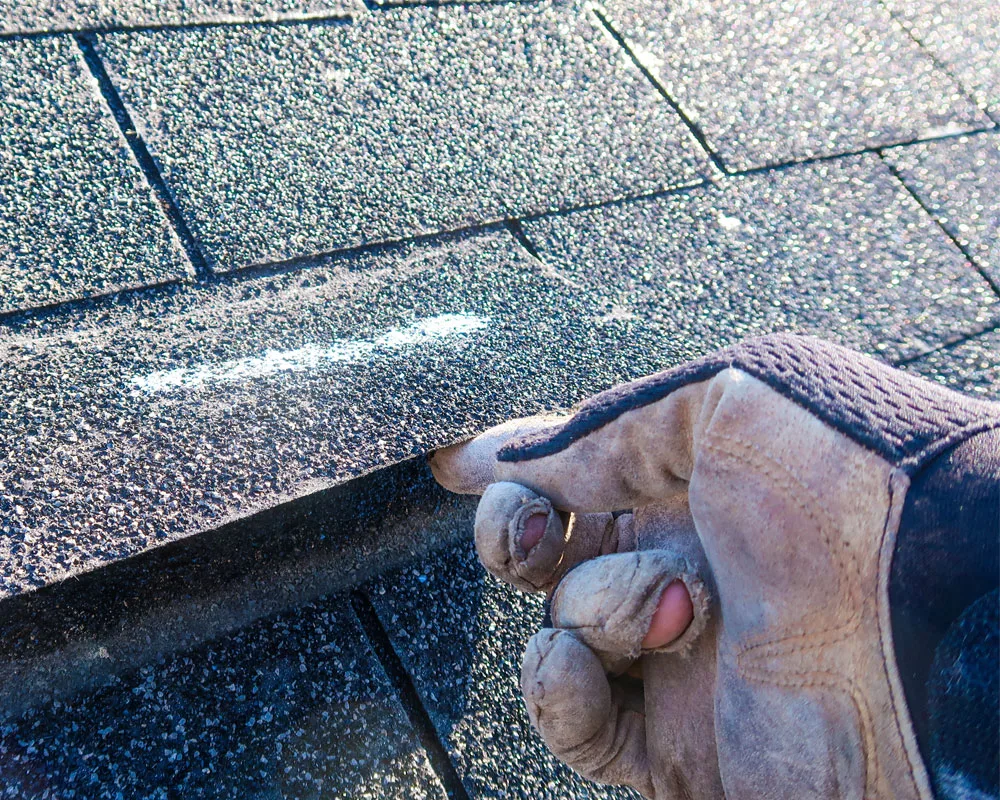
This is particularly important for homeowners with older tile roofs in Sun City. Concrete or clay tiles are the visible exterior covering, but the components underneath do the real work of keeping water out of the home.
Our inspection process specifically evaluates underlayment, flashing, pipe boots, valleys, decking, and roof penetrations, not just the condition of the visible tiles. Water also travels after it enters the roofing system, so the location of a ceiling stain is not necessarily directly below the entry point. Our leak detection process traces moisture back toward its actual source rather than assuming the interior stain identifies it.
That creates an important insurance distinction. If a specific storm damaged the roof and allowed water inside, that is different from a roof that began leaking because an aging component reached the end of its service life. A professional inspection documents what is physically happening with the roof. The insurance company then determines how the policy applies to those findings.
If you are wondering how much life your tile has left, read how long tile roofs last in Arizona.
What Should You Do After Discovering Storm Roof Damage?
If you believe a monsoon, windstorm, hail, or falling debris damaged your roof, resist the urge to immediately authorize permanent repairs. Arizona DIFI recommends a specific sequence: protect your safety, contact your insurance company promptly, document damage with photos, take reasonable steps to prevent additional damage when safe, avoid beginning repairs before the adjuster has had an opportunity to evaluate the property, and keep records and receipts.
Make safety the priority: Do not climb onto a wet, unstable, or storm-damaged roof to investigate it yourself, especially a tile roof.
Photograph what you can safely see: Interior ceiling or wall stains, fallen debris, visible missing or displaced roofing, water intrusion, damage around the property, and the date and approximate time you noticed the problem.
Contact your insurance company: Notify your insurer promptly and ask what they want you to do next. DIFI advises homeowners to contact the insurer before repairing, replacing, cleaning, or disposing of damaged property.
Prevent additional damage when necessary: For an active roof opening, that could mean temporary protection such as emergency tarping when it can be done safely. Our emergency roofing service can secure an open roof and document the work.
Get the roof properly inspected: Our inspections include photo-documented reports covering roof surfaces, underlayment, decking, flashing, valleys, penetrations, moisture, and potential leak points.

How Does An Arizona Roof Insurance Claim Work?
The exact process varies by insurer and policy, but a typical roof claim moves through several stages.
A roofing contractor can document roof conditions and provide a repair estimate, but the insurer determines coverage under the policy.
Damage occurs: A windstorm, hailstorm, falling object, or another event affects the property.
The homeowner documents and reports: You photograph the damage and contact the insurer, which provides instructions and may assign a claim number and adjuster.
The roof is evaluated: The insurer may inspect the property, while a roofing contractor separately documents the roof's condition and identifies needed repairs.
Coverage is determined: The insurance company applies the policy language, exclusions, deductible, and other terms to the loss.
A repair scope is established: Depending on the damage and coverage decision, the project could involve a localized repair or full roof replacement.
Deductibles, ACV, And Replacement Cost: What Should You Check?
Two homeowners with similar roof damage can have very different claim outcomes because their policies are not structured the same way. Start with your deductible. If a covered repair costs only slightly more than the applicable deductible, the financial calculation is different from a major storm loss requiring extensive work.
If a claim leaves a gap, our financing options can spread the homeowner's share across manageable monthly payments.
Actual cash value: Arizona DIFI defines actual cash value, or ACV, as replacement cost minus depreciation. Age and depreciation can reduce the amount calculated for a covered roof loss.
Replacement cost: Replacement-cost provisions work differently, and policies can place conditions on when replacement-cost payments are made. DIFI advises homeowners to understand which type of coverage their policy provides.
Roof-specific provisions: Some policies apply ACV specifically to roof damage from wind or hail even when other losses receive replacement-cost treatment. Do not assume your roof is handled one way or the other. Check your declarations page or ask your insurance company or agent.

When Might Paying Out Of Pocket Make More Sense Than A Claim?
Not every roof problem calls for an insurance claim. Suppose an inspection identifies a relatively small repair and there is no clear covered storm event, or the estimated repair cost is close to your deductible. In those situations, homeowners should understand the repair cost and their policy before deciding how to proceed.
This is where the distinction between damage assessment and coverage determination matters. A roofer can tell you what appears damaged, what needs to be repaired, and what that work is expected to cost. Your insurance company tells you whether the loss is covered.
If you are comparing the cost of a localized repair with your deductible, our roof repair cost guide for Sun City and Peoria breaks down the repairs that commonly affect West Valley homes and what they typically run.
What Should A Storm-Damage Roof Inspection Document?
For a possible insurance loss, useful documentation should be specific. A thorough roof inspection may document roof type and overall condition, missing, cracked, lifted, or displaced materials, impact damage, underlayment condition where it can be evaluated, flashing, valleys, vents, and penetrations, suspected water-entry points, interior signs of moisture, photos of observed damage, and a recommended repair scope.
Sun City AZ Roofing provides photo-documented written inspection reports and specifically offers post-monsoon assessments and insurance-claim photo documentation. Good documentation does not guarantee coverage. It creates a clearer record of the roof's physical condition so the homeowner and insurer have better information to work from.
Common Roof Insurance Claim Mistakes To Avoid
Assuming every leak is covered: A ceiling stain does not establish why water entered the home. The cause matters.
Making permanent repairs too early: Arizona DIFI warns homeowners to give the insurer an opportunity to confirm and evaluate damage before permanent repair or replacement work begins.
Throwing away damaged materials: Your insurer may want to inspect damaged property, so follow its instructions before disposing of materials.
Failing to document emergency work: If immediate action is necessary to prevent further damage, photograph conditions before and after and keep every receipt.
Skipping routine inspections: Regular inspections create a record of roof condition over time. Our maintenance plans include annual, pre-monsoon, and post-monsoon inspections with written reports and photos.
Roof Damage In Sun City Or Peoria? Start With The Cause
When you discover roof damage after an Arizona storm, do not begin by assuming you need a new roof, or that insurance will automatically pay for one. Start by determining what happened. Was roofing displaced by wind? Did debris strike the roof? Is water entering around damaged flashing? Is an older tile roof experiencing underlayment deterioration? Is the problem localized enough to repair?
For a potential insurance loss, notify your insurance company promptly and follow its instructions. A professional roof inspection can then provide detailed information about the roof's condition, observed damage, and repair needs.
Sun City AZ Roofing provides roof inspections, storm-damage assessments, leak detection, repairs, and photo documentation for homeowners in Sun City, Sun City West, Peoria, and throughout the West Valley. If your roof was damaged during a recent storm or you have discovered a new leak, request a roof inspection so we can identify the source and document the condition of your roof. Before you sign anything, read our guide on how to choose a roofing contractor in Arizona so you can check the license and compare bids properly.
For the hours right after a storm, our emergency storm damage roof repair guide covers mitigation, tarping costs, and the documentation an adjuster expects.
Related Reading & Services
- Free Roof InspectionPhoto-documented report you can hand to your adjuster.
- Roof Repair & Leak DetectionTracing leaks back to the real entry point.
- Emergency Roof ServiceTarping and containment during monsoon season.
- Roof Repair Cost In Sun City & PeoriaCompare a typical repair against your deductible.
- Monsoon Roof Damage ChecklistWhat to check after a West Valley storm.
- Roof ReplacementWhen storm damage goes past a localized repair.
- Roofing In Sun CityLocal crews who know these roof profiles.
- Roofing In PeoriaFast storm response across Peoria.
Need A Sun City Roofer?
Talk to a real Sun City AZ Roofing team member, fast scheduling and honest, upfront pricing.